Can I Learn First Aid Without Kneeling?
Understand the practical activities and discuss suitable support.
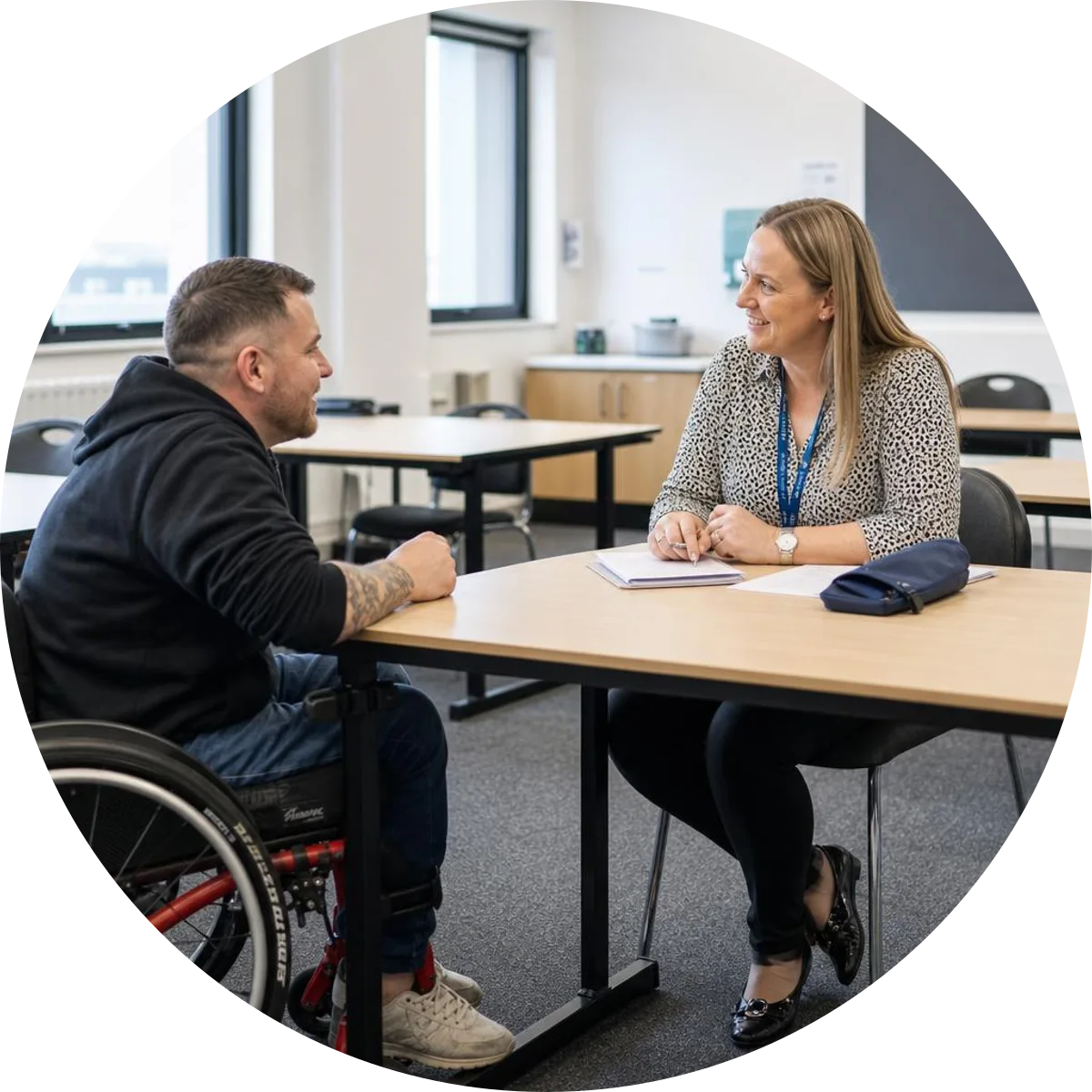
You can learn useful First Aid even if kneeling is difficult. For a practical qualification, talk to us about the required skills and appropriate support before booking.
A course includes demonstrations and explanations as well as hands-on work. The best first step is to discuss the actual movements and assessment, rather than assume you must exclude yourself.
Why Does Floor-Level Practice Matter?
Cardiopulmonary resuscitation (CPR) and recovery-position practice can involve helping a casualty at floor level. Qualifying courses assess relevant practical skills, not just knowledge.
What Support Can We Discuss?
We can explain the course activities and discuss support or adjustments for your circumstances. To receive the qualification, you need to demonstrate the required practical skills.
Could Online Learning Help?
Online learning can introduce the subject or refresh knowledge. Blended qualification courses still include practical training and assessment.
If you want personal awareness rather than a workplace or childcare qualification, tell us. We can help you choose useful learning for that goal.
Early Years Staffing Requirements
The Early Years Foundation Stage (EYFS) includes a disability exception to certain staff-ratio Paediatric First Aid (PFA) requirements. It affects how an otherwise competent staff member may count in ratios. The setting still needs the required full PFA cover, and practical qualifications retain their assessment requirements.
Speak to us before paying so we can explain your course. If already booked, contact us ahead of attendance. The EYFS guide sets out the separate cover rules.
Discuss the Course With Us
Tell us about the activities or access you want to discuss, privately and before attendance.
Need a hand? Contact our friendly team.
How Can We Serve You?
Get In Touch.
EXPLORE OUR COURSES
